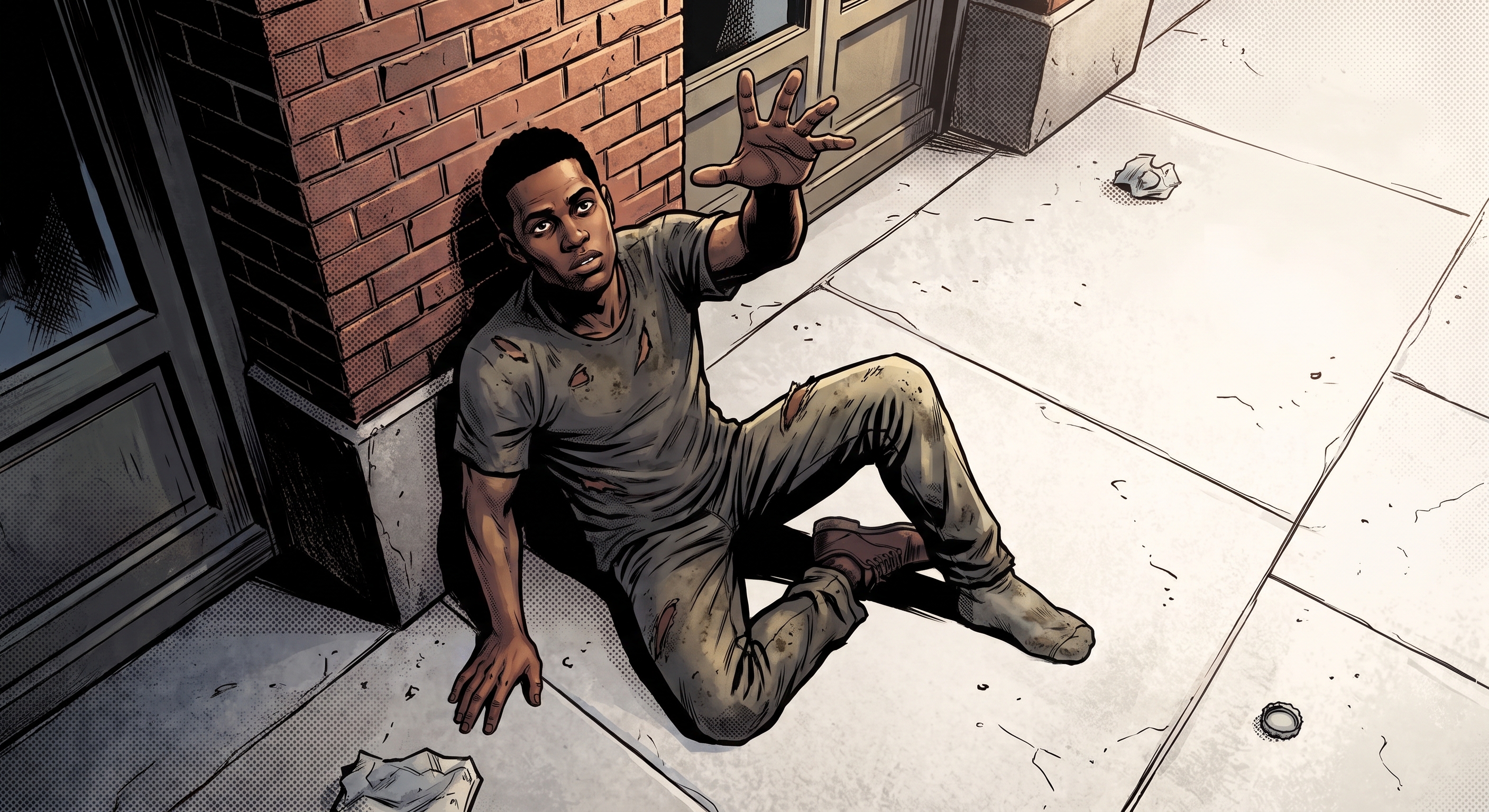
You are walking down an upscale urban street. Up ahead, a Black man is sitting on the ground, his back propped against a brick building.
As you walk past, he makes direct eye contact with you. He extends a trembling hand. He is about to ask for something.
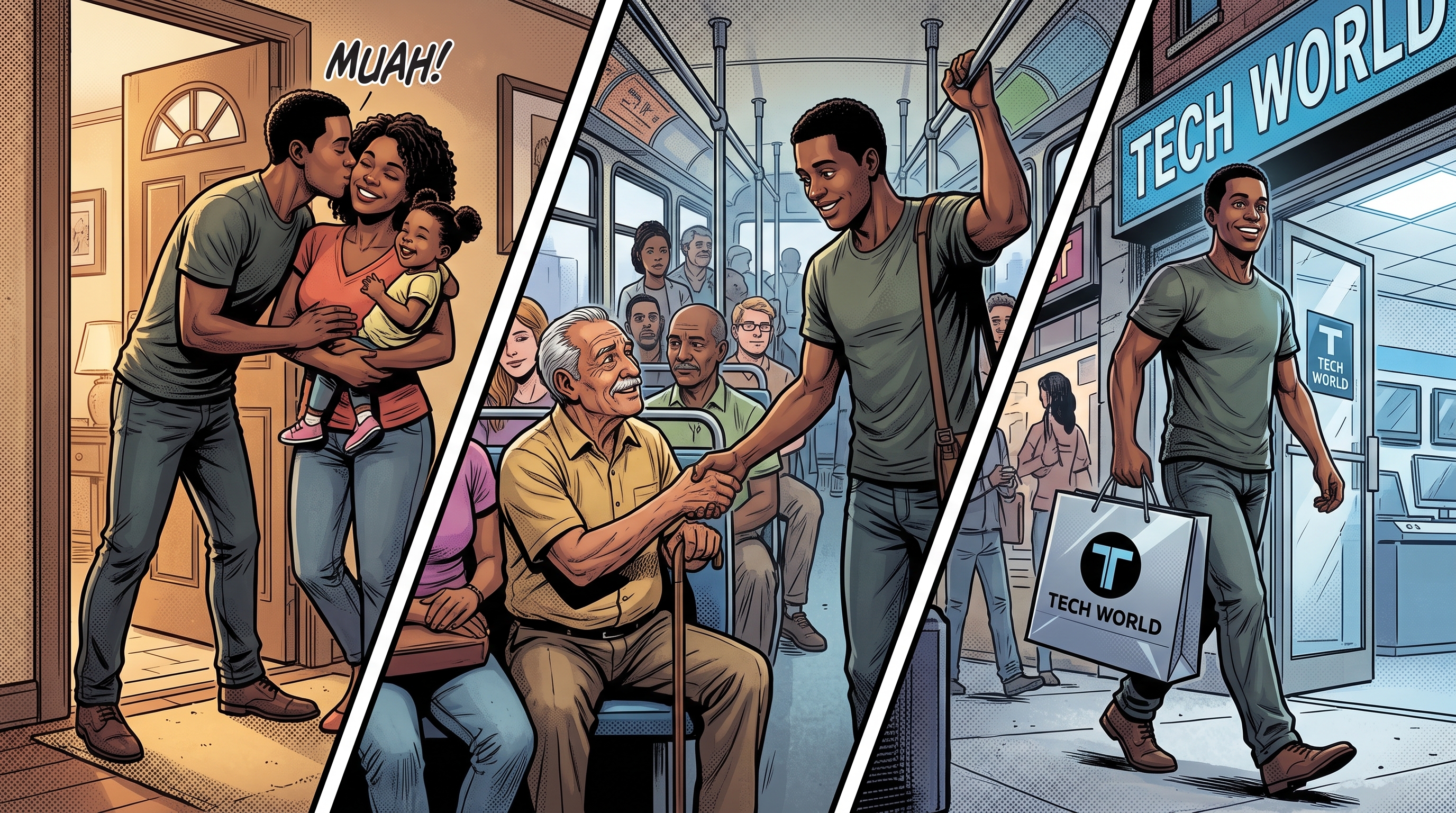
A 28-year-old man stands in the doorway of his home. He kisses his wife, hugs his young daughter, and tells them he'll be back soon.
He embarks on foot. He waves to his neighbors as he walks down the block; they call each other by name.
He boards the #11 bus heading downtown. When an elderly man gets on a few stops later, our main character stands up and offers his seat.
He disembarks in the upscale urban district. Holding the door open for a mother and child, he enters an electronics store.
He picks up a set of batteries for his daughter's favorite toy, spots a pair of headphones his wife has been wanting on sale, and grabs those too. He pays, smiles at the cashier, and walks out with a branded shopping bag.
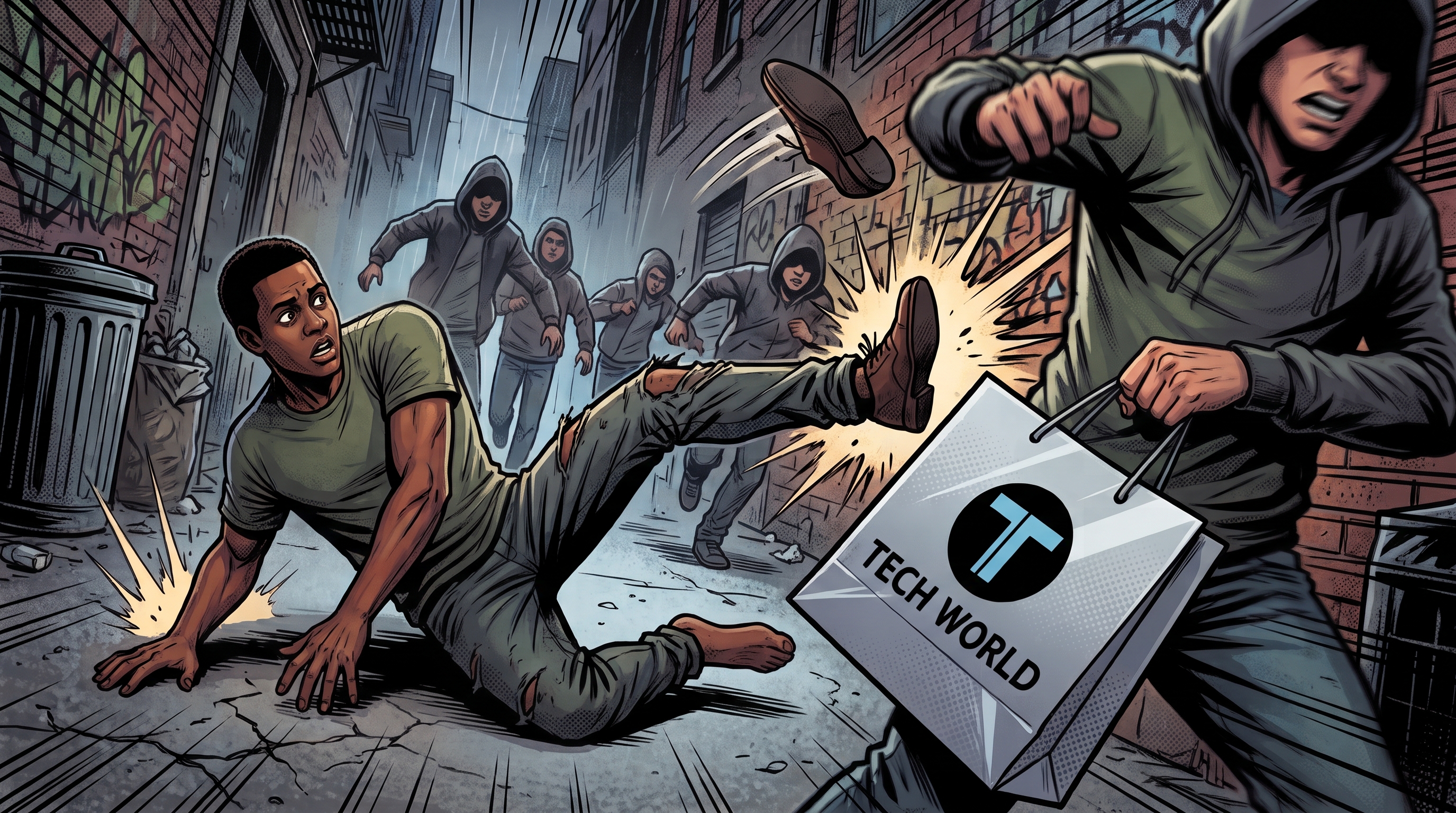
As he walks away from the storefront, a group of delinquent youth spot him and the electronics bag in his hand.
They approach rapidly and attempt to snatch the bag.
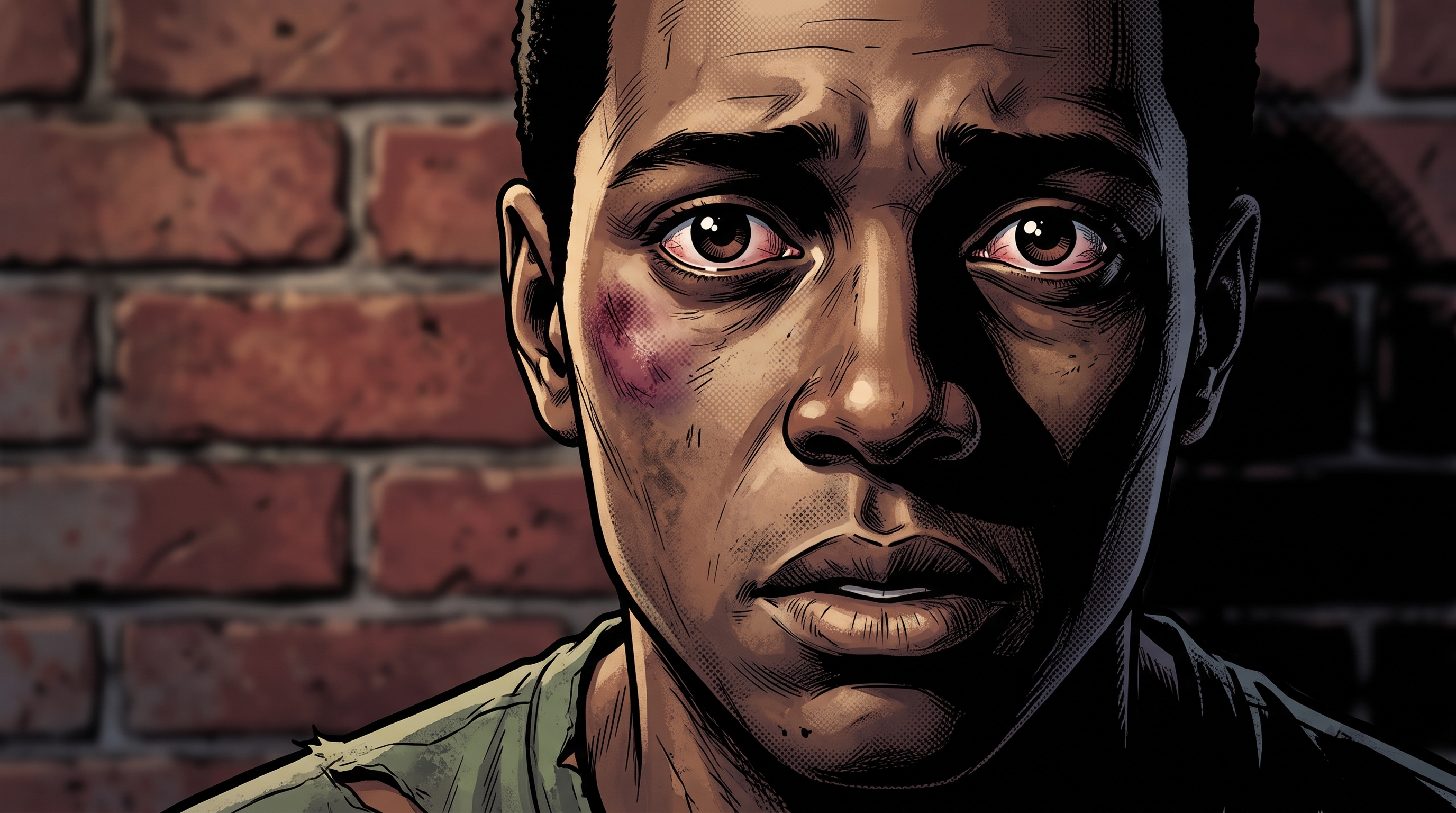
He resists. The youths swarm him. They beat him mercilessly, ripping his shirt and tearing his pants in the scuffle.
They knock him violently to the pavement, snatch the bag, and take off running down an alleyway.
Bruised, disoriented, and bleeding, the man shimmies up and props himself against the brick building to catch his breath.
You are back in the present moment, standing on the street.
The man looks up at you, extends his trembling hand, and speaks:
Without seeing the previous hour, it is human nature to judge the man on the ground. We assume he is lazy, broken, or suffering from a personal moral failure.
There is a concerted effort in America to erase the "previous hour" of Black history. The redlining, the wealth extraction, the mass incarceration, the bombings of Black businesses—these were the robbery.
When you ban the history, you erase the robbery. And without the context of the robbery, society looks at the victim on the ground and asks: "Why don't you have any shame?"